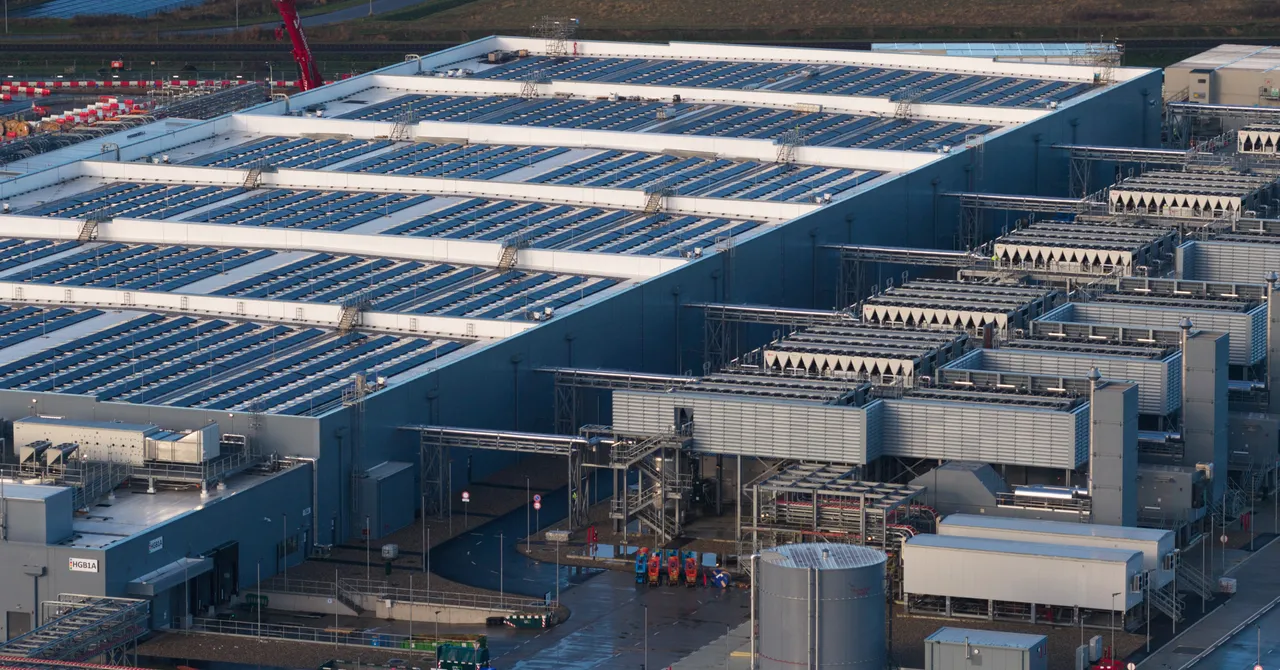
Chevron’s Energy Forge One has applied to the state Board of Comptroller for a tax abatement for a power plant it is building in West Texas. In late January, the Comptroller’s Office made a recommendation to support approval of the application, the first such approval under the program for a power plant dedicated solely to data center use.
In March, following news reports that Microsoft was eyeing purchasing power from the Energy Forge project, Chevron said it had entered into an “exclusive agreement” with Microsoft and Engine 1, an investment fund involved in the project. In January, Microsoft pledged to be a “good neighbor” in the communities where it builds data centers, including promising to pay a “full and fair share of local property taxes.”
The potential tax break for the project comes as big technology companies grapple with growing public anger over data centers and electricity costs. It also comes as lawmakers have begun to take a more critical look at bloated incentives for data centers, some of which have cost some states – including Texas – $1 billion or more each year.
All tax incentives under consideration for the Energy Forge project “apply only to the power generation facility” to “support new energy infrastructure, and do not extend to any future data center facilities that may be served,” Chevron spokeswoman Paula Beasley told WIRED in an email. Beasley also said that there is currently no “final agreement” with Microsoft regarding this power plant.
“Microsoft is in discussions with Chevron,” Rima Al-Alayli, Microsoft’s corporate vice president and general counsel for infrastructure, said in a statement to WIRED. “Commercial terms have not been finalized, and there is no final agreement at this time.”
Chevron is applying for a tax abatement for the project under the Texas Jobs, Energy, Technology and Innovation (JETI) Act. The program, approved in 2023, aims to incentivize companies to build large infrastructure projects in the state in exchange for guarantees to create jobs and revenues. Accepted projects receive a maximum amount of taxable property that can be collected through local school district taxes.
The Pecos-Barstow-Toyah School Board approved the project application at a meeting in February. The state pays for the tax abatement, so the school district itself doesn’t lose any money.
According to documents from the state, the Chevron project could generate savings for the company of more than $227 million over 10 years, depending on the final size of the project and investment. The application says the plant would create “more than 25 full-time permanent jobs,” although there is no requirement to do so because it is considered a power generation facility.
The planned gas plant will not connect to the grid, instead providing “electricity for direct consumption through a data centre,” according to its application. So-called behind-the-meter gas stations have become increasingly popular for data center developers who face long wait times to connect to the network. According to data from the nonprofit Global Energy Watch, at the beginning of the year the United States had nearly 100 gigawatts of gas-generated power in the development pipeline just to power data centers, with several large gas projects announced since the data was published.
A WIRED analysis of less than a dozen power plants being built explicitly to serve data centers, including Chevron’s project, found that these power plants are allowed to emit more greenhouse gases than many small and medium-sized countries. The Energy Forge plant alone could emit more than 11.5 million tons of carbon dioxide2 That’s the equivalent annually – more than the nation of Jamaica would emit in 2024. The plant “was designed to comply with applicable environmental regulations, including all applicable federal and state air quality standards,” Beasley told WIRED.