Countries like Saudi Arabia and the United Arab Emirates have spent billions building AI infrastructure, attracting super-scalers and positioning themselves as future exporters of computing power. But as the region shifts from oil wealth to AI-based economies, the infrastructure that holds that data is increasingly a strategic vulnerability.
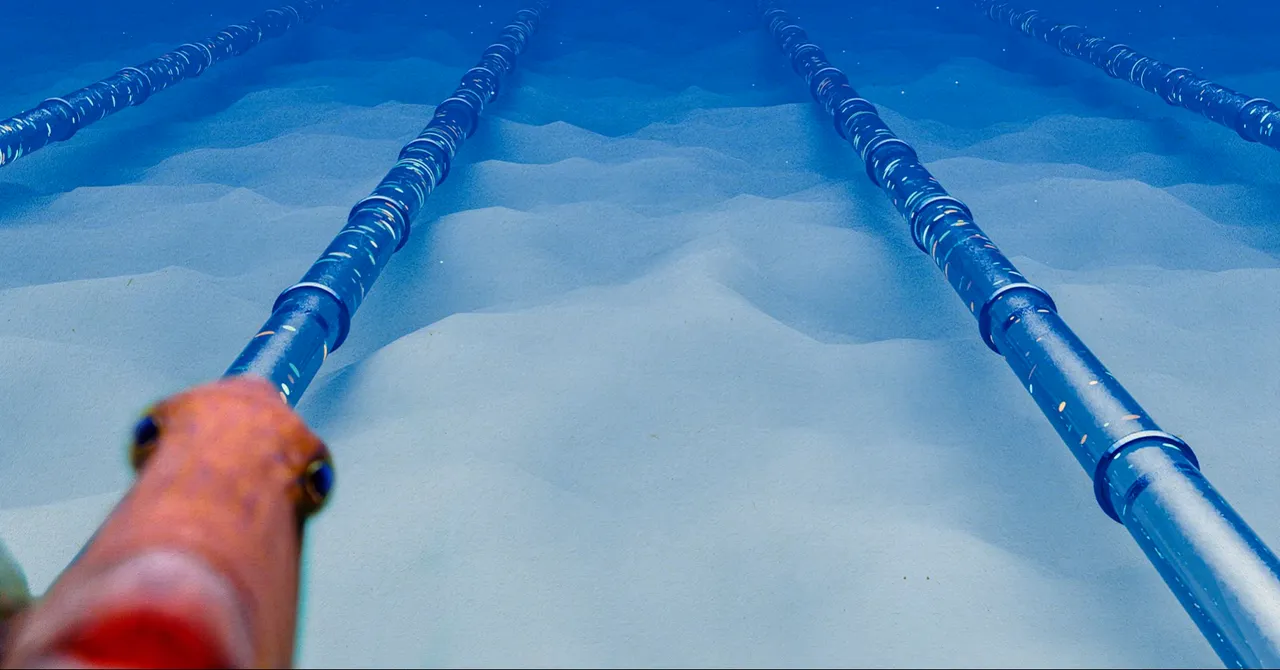
Submarine cables have long powered the global Internet. Now these assets have become geopolitical assets.
Following the escalation between the US, Israel and Iran earlier this year, experts warned that the regional conflict could threaten vital cable infrastructure in the Gulf. In May, media reports claimed that Iran was considering taking control of all seven submarine cables that pass through the Strait of Hormuz.
Submarine cables carry an estimated 95 percent of all international data traffic. For the Gulf region, the problem is concentration: the bulk of the region’s connectivity with Europe and the United States still depends on a few routes through the Red Sea and the Strait of Hormuz.
The Middle East lies at the intersection of Europe, Asia and Africa, making the region one of the world’s most strategically important transit regions for global Internet traffic.
Today, a damaged cable can lead to more than just slow internet speeds. This could completely undermine the emerging AI business model in the Gulf region.
In many ways, the Gulf states are trying to convert energy wealth into AI infrastructure, exporting computing power and cloud capacity as they once exported hydrocarbons.
For economies in the Middle East, which are poised to become large-scale exporters of computing power, the importance of and reliance on these cables is growing, not least because huge companies setting up shop in the region require higher flexibility than ever before.
Unlike traditional Internet traffic, AI infrastructure relies on massive, continuous flows of data between large-scale data centers, cloud providers, and enterprise customers. Even short outages can result in significant operational and financial consequences, making resilient fiber infrastructure a business necessity rather than a luxury.
“High-speed carriers and regional carriers are pushing to diversify because their requirements have moved beyond bandwidth,” says Imad Atwi, partner at management consulting firm Strategyand Middle East. “They now need multiple independent paths, predictable latency, and the ability to survive geopolitical pressures.”
Artificial Intelligence is forcing the Gulf to rethink communication
The pressure is mounting. In 2025, two cables connecting Europe to the Middle East and Asia were cut in the Red Sea, degrading internet connectivity across the Gulf for days and causing an estimated $3.5 billion in damage from lost services.
This incident was before AI deployment began to pick up speed and data centers began connecting to the Internet. Now, hyperextensionists are demanding the same standards of flexibility in the Middle East that they already rely on across the trans-Atlantic and trans-Pacific routes. These markets typically operate across four or five physically separate network paths to minimize the risk of disruption.
In comparison, the Gulf remains highly dependent on a narrow concentration of roads.
“Ultra-expanders now want a similar diversity of routes across the Middle East, both for connectivity between the Gulf and Europe and for Europe-Asia traffic passing through the region,” says Bertrand Kleska, partner at Pioneer, a submarine cable consultancy.
For many years, proposed land and sea routes through the Middle East have struggled to move forward due to regulatory barriers, political instability, and regional conflict.
Now, many of these same corridors are being reconsidered as critical digital infrastructure.
Atwi describes a multi-layered strategy emerging across the Gulf. The first layer includes Gulf landing stations connected via terrestrial fiber corridors extending through the Kingdom of Saudi Arabia, the United Arab Emirates and the Sultanate of Oman, and then extending towards Europe and Asia via Jordan and the Levant. The second layer would provide new undersea systems that bypass checkpoints around Egypt and Bab al-Mandab. The third goal is to create northern land corridors through Iraq, Syria and Turkey.
New strategic corridors of the Internet
Some of the region’s most ambitious projects involve countries that were previously viewed primarily through the lens of conflict.
Ground-based systems, such as those proposed across Syria, can support up to 144 fiber pairs compared to the typical 24 pairs in submarine cables today, meaning the capacity potential is huge. The downside is that they are above ground, making them more vulnerable to physical disturbances. This is not an abstract risk.