• The Community Development Authority is studying the development of tourism in the main water source
• Critics cite past controversies and environmental risks
ISLAMABAD: City managers are planning to develop water sports and recreational facilities near Simli Dam, a move that may pose environmental challenges to residents.
The dam, built in 1983, is located 30 kilometers east of Islamabad in the foothills of the green mountains and is considered a major source of clean drinking water.
Other dams in Islamabad, including Rawal Dam, which supplies water to Rawalpindi, are already severely polluted, mainly due to uncontrolled pollution in the catchment area.
The Simli Dam, located in a less visited area, is still a source of clean drinking water. However, the federal government and the Capital Development Authority (CDA) are now planning to introduce recreational activities in the area.
The CDA Board recently approved a summary to hire former Chairman Kamran Lashari as Consultant (City Secretary) to “prepare a comprehensive city-wide culture and tourism vision for Islamabad” at a salary of Rs 2 million per month.
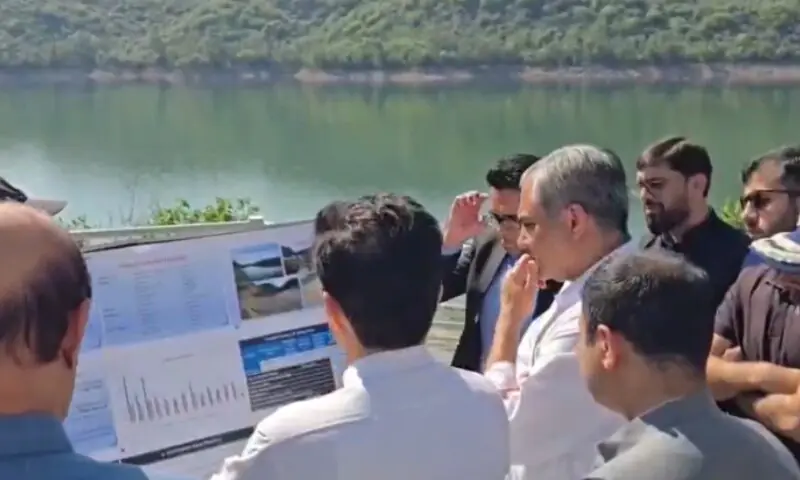
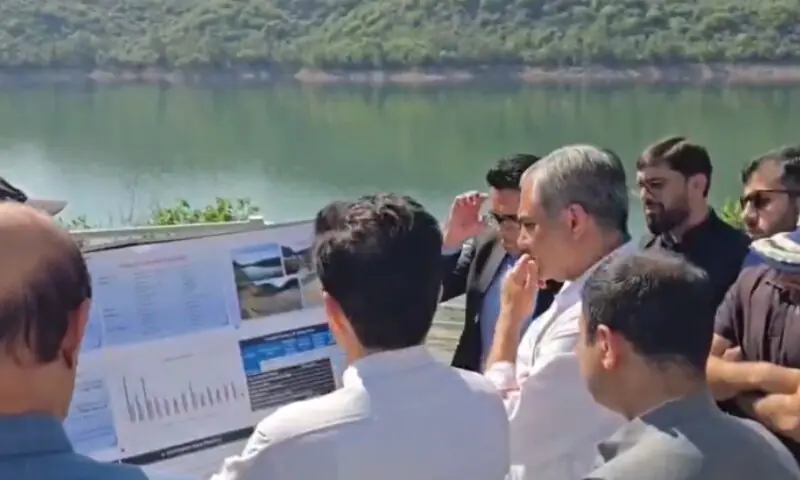
Although the official notification is yet to be issued, Lashari was recently seen briefing Home Minister Mohsin Naqvi about the Simli Dam and it is likely that he will prepare a plan to promote water sports and tourism near the reservoir.
Meanwhile, the Interior Ministry on Wednesday issued a press release saying, “Interior Minister Mohsin Naqvi has instructed the authorities to prepare a practical plan to expand Simli Dam, which currently supplies 40 percent of Islamabad’s water, and develop the surrounding area for tourism and water sports.”
During a detailed visit to the dam, Naqvi was briefed on its capacity and informed that the expansion would ensure ample water supply to the capital. He called on officials to submit a comprehensive plan for the project soon.
</figure>
The Interior Minister also reviewed the area surrounding the reservoir and sought a separate plan to promote recreational activities.
“There are huge opportunities for recreational activities in the vicinity of Simli Dam. Water sports and other facilities would drive local development,” he said, adding that the initiative would create employment opportunities for locals and give citizens access to “world-class recreational facilities.”
The press release noted that the reservoir is already used informally for boating and picnics but lacks formal infrastructure, safety measures or facilities managed by the Community Development Authority.
It is worth noting that Lashari served as Chairman of the City Development Authority from 2003 to 2008. During his tenure, the city witnessed major development and beautification works, in addition to the launch of many controversial projects.
Some of the major works during his tenure included the construction of 7th and 9th Avenues, three tunnels on 7th Avenue, including one at China Chowk, widening the expressway, the Zero Point Interchange, rebuilding and widening several roads, developing dozens of parks and playgrounds, seating areas in malls, installing signage, and building public toilets and passenger shelters at bus shelters.
However, the CDA also launched several controversial projects during his tenure. Many of them have faced inquiries by the Federal Investigation Agency (FIA) and the National Accountability Bureau (NAB), and others remain neglected, raising questions about the competency of the civilian agency.
In 2005, the CDA leased a 13.5-acre plot of land (One Constitution Road) to build a five-star hotel for Rs4.8 billion, but handed over its possession after receiving only Rs800 million. The problem resurfaced recently with the Community Development Authority seeking to acquire the Twin Towers due to default and non-delivery, as the developer built about 250 residential apartments instead of a hotel.
Likewise, during Lashari’s tenure, the CDA established restaurants in Margla Hills and widened roads by installing lights, attracting heavy traffic to the area, disrupting the environment and ecosystem. The Supreme Court later ordered the cessation of commercial activities on Pir Sohawa Road.
During the same period, the city also lost one of its historical landmarks, a one-story indoor market designed by a British architect. It was demolished in 2007 after the Community Development Authority controversially amended bylaws to allow the construction of a multi-storey plaza, although residents and courts later intervened, citing infrastructure limitations in the area.
Published in Al-Fajr, May 7, 2026