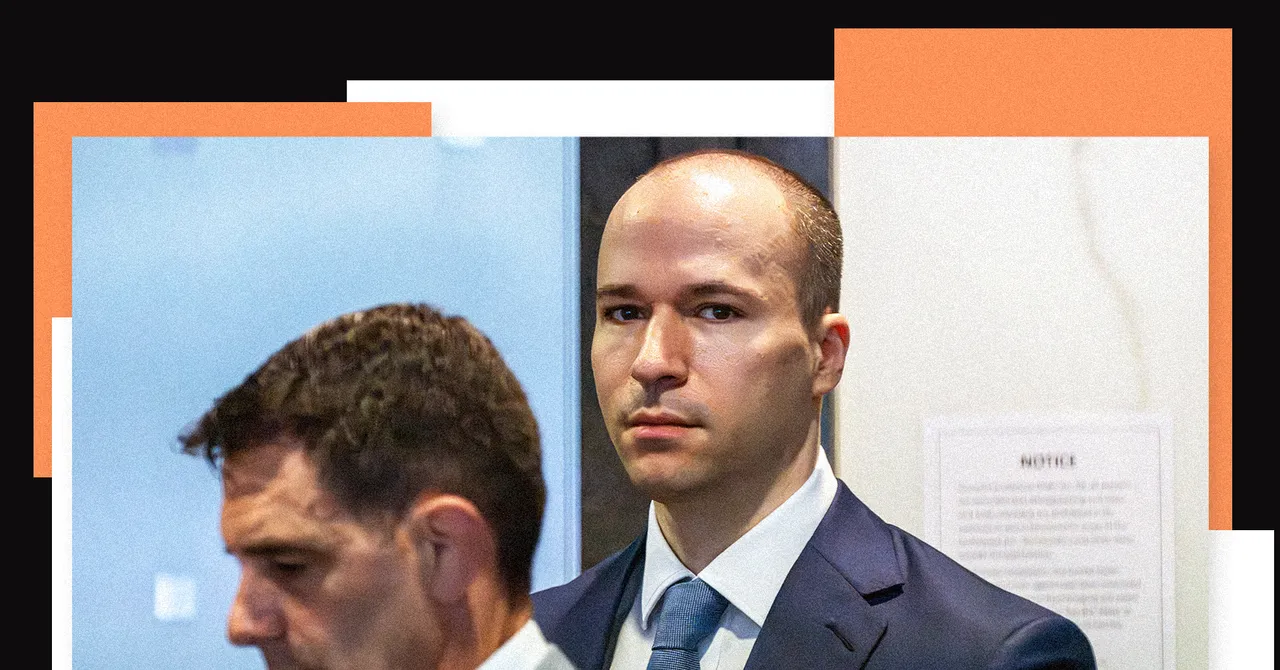
The letter – which OpenAI’s lawyers announced on Sunday, and which Judge Yvonne Gonzalez Rogers later refused to let the jury hear – underscores what may be Musk’s larger goal in this trial. It appears that he is not only trying to win the jury’s favor to remove Brockman and CEO Sam Altman from power, but also trying to throw dirt on the two men and damage OpenAI’s public image.
When Brockman took the stand on Monday, Musk’s lawyer, Steven Mollo, quickly began questioning him about his compensation at OpenAI. Brockman revealed that his stake in OpenAI stock is currently worth more than $20 billion, and possibly as much as $30 billion. While Brockman initially promised to donate $100,000 to OpenAI when it was under construction, he said he ultimately never committed to doing so.
Brockman has held a number of useful roles at OpenAI since he co-founded the company in 2015. In the startup’s early days, it operated out of his apartment in San Francisco’s Mission District. Today he is deeply involved in refocusing OpenAI on a few key products, such as Codex. Last year, Brockman also gave millions to major political action committees promoting AI and President Trump, and he has previously said that this increased political spending ties into OpenAI’s founding mission to create artificial general intelligence that benefits all of humanity.
In court Monday, Molo tried to prove that Brockman and Altman had essentially plundered the original nonprofit OpenAI, which Musk funded and helped create.
In its early days, OpenAI told investors and employees that its nonprofit mission took precedence over making a profit. Brockman testified that his financial interests remain, to this day, second only to OpenAI’s nonprofit mission.
When OpenAI created its for-profit arm in 2019, which received assets from the nonprofit, Brockman testified that he took a significant stake in the new entity. Early in OpenAI’s history, Brockman indicated his desire to become a billionaire, writing in his personal journal, “Financially, what will get me to a billion dollars?”
On Monday, Molo pressed Brockman for several minutes about the massive fortune he had accumulated after his initial goal.
“Why wouldn’t you donate $29 billion to the non-profit OpenAI? Why wouldn’t you?” Molo asked. Brockman responded that he and others put “blood, sweat and tears” into building OpenAI in the years after Musk left the company.
The OpenAI Foundation has a stake of more than $150 billion in the company, making it one of the richest nonprofits in history, Brockman said. That’s roughly five times Brockman’s ownership stake. In total, OpenAI employees own about 25 percent of the shares. The foundation has 27 percent. Brockman testified that the OpenAI nonprofit received less than $150 million from donors, meaning Musk was incidental to the company’s success and that the real motivations were those who stayed behind in building OpenAI.
Of course, Brockman’s stake in OpenAI could be worth more than $30 billion if the company goes public in the next two years. When asked if OpenAI was exploring a potential IPO, Brockman said he thought so.