Chinese President Xi Jinping called on Washington and Beijing to be “partners, not competitors” as he began two days of talks with US President Donald Trump on Thursday.
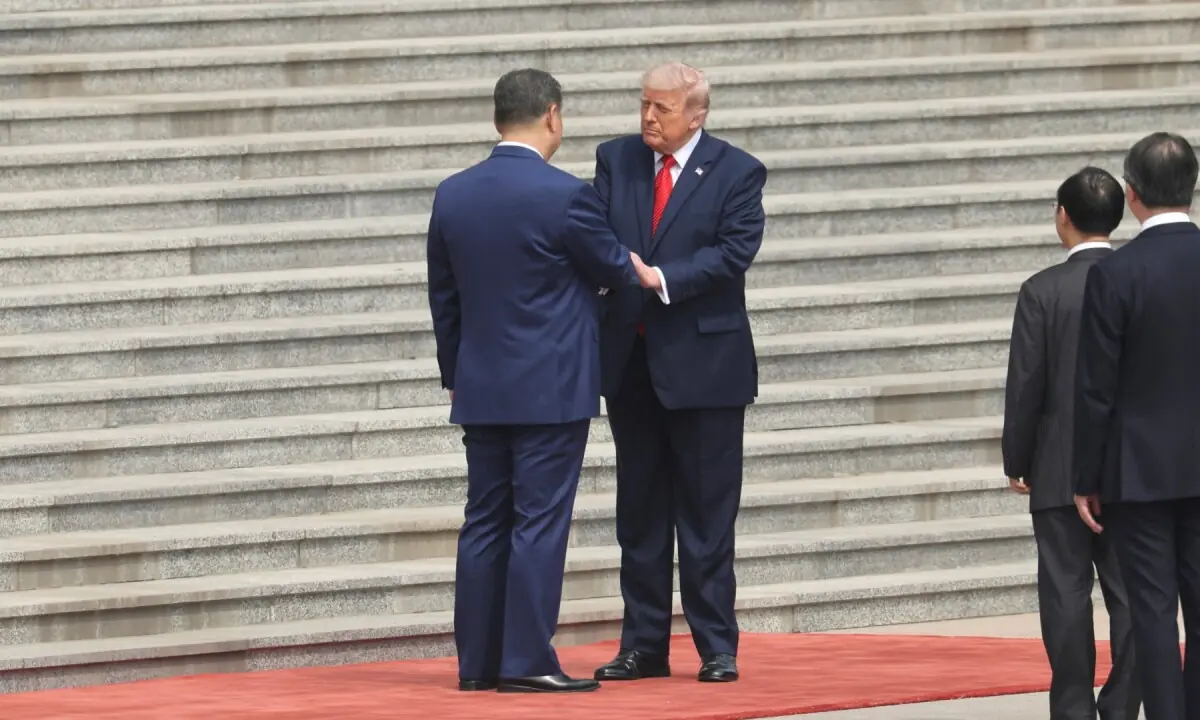
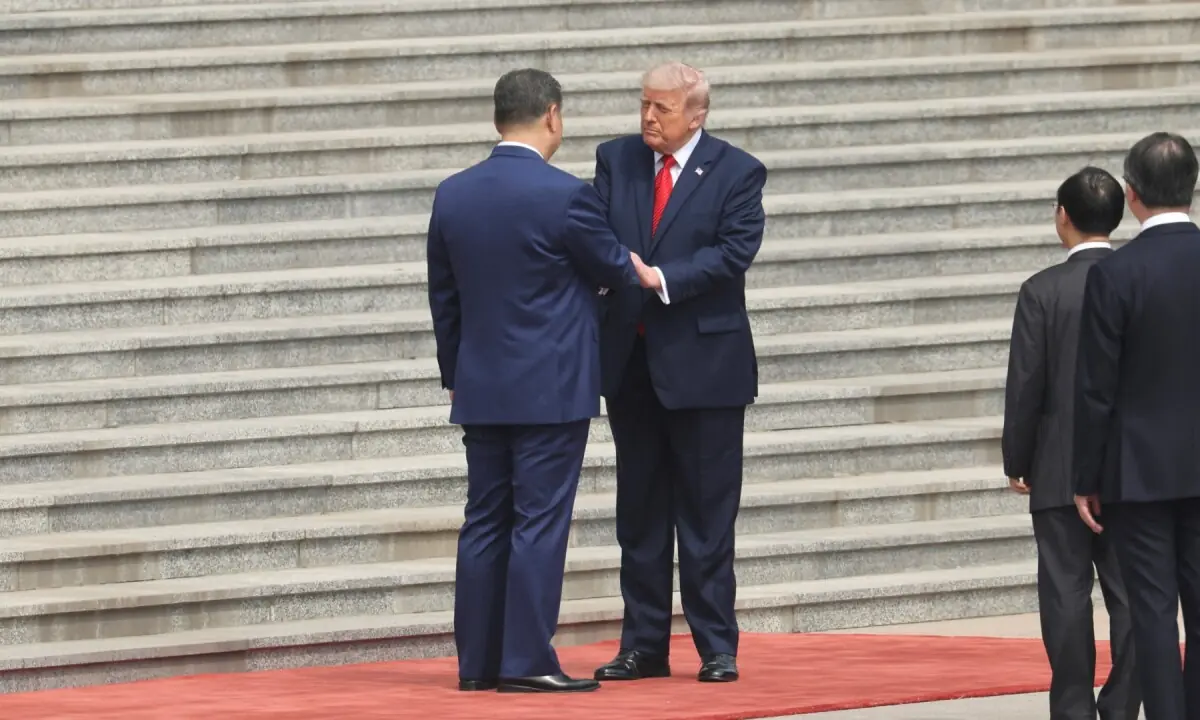
The day began with Xi welcoming US President Trump with a handshake in the stately Great Hall of the People.
</figure>
Accompanied by Trump, Xi shook hands with several US officials, including Pentagonist Peter Hegseth and Secretary of State Marco Rubio, who has been known throughout his career as a fierce opponent of Beijing.
</figure>
Trump and Xi stood in the middle while a Chinese military band played The star-spangled banner Then the Chinese national anthem with cannons being fired.
Schoolchildren were jumping around in brightly colored clothes, waving American and Chinese flags and chanting “Hello, hello” as Trump and Xi passed by them in the square.
</figure>
“You’re a great leader,” Trump later told Xi as they sat across from each other, flanked by their delegations. “Sometimes people don’t like me saying that, but I say it anyway.”
Trump said: “There are those who say this may be the biggest summit ever… It is an honor to be with you. I am honored to be your friend and the relationship between China and the United States will be better than ever.”
</figure>
For his part, the Chinese President said that the two countries should be “partners, not competitors.”
“Stable relations between China and the United States are a blessing to the world. Cooperation benefits both sides, while confrontation harms both. We should be partners, not competitors,” Xi said.
Xi added that he was “happy” to receive Trump on the US leader’s first trip to China since 2017 as “the world has reached a new crossroads.”
The two leaders will also enjoy a state banquet at the Hall in the evening, and Trump will visit the historic Temple of Heaven, a World Heritage site where Chinese emperors once prayed for a good harvest.
The US president arrived for the two-day summit aboard Air Force One late Wednesday accompanied by top executives, including Nvidia’s Jensen Huang and Tesla’s Elon Musk – symbols of the trade deals Trump hopes to reach.
The trip to Beijing represents the first by a US president in nearly a decade, after Trump’s visit in 2017, accompanied – unlike this time – by his wife, Melania.
“big hug”
At the top of Trump’s wish list will be concluding trade deals in the fields of agriculture, aircraft, and other topics, with a group of senior businessmen in the US President’s delegation.
Aboard Air Force One en route to Beijing, Trump vowed on social media to push Xi to “open up” China to American companies “so these brilliant people can work their magic.”
But Trump is dealing with a different and bolder China than the one he visited nine years ago, with a host of unresolved trade and geopolitical tensions between the two countries.
The Iran war in particular threatened to weaken Trump’s position in the talks with Xi, having already forced him to postpone them from March.
The US president said he expected a “long conversation” with Xi about Iran, which sells most of its US-sanctioned oil to China, but insisted that “I don’t think we need any help on Iran” from Beijing.
US Secretary of State Marco Rubio spoke in a slightly different tone.
US Secretary of State Marco Rubio told a television channel, “We hope to convince them to play a more active role in getting Iran to move away from what they are now doing, and trying to do now, in the Persian Gulf.” Fox News In an interview broadcast Wednesday.
Customs truce?
The long-running trade war between the two countries will be high on the agenda, after sweeping tariffs imposed by Trump last year resulted in reciprocal tariffs exceeding 100%.
Trump and Xi are set to discuss a one-year extension of the tariff truce, which the two leaders reached during their last meeting in South Korea in October, although an agreement is far from certain.
On Taiwan, another issue that has bedeviled relations, Trump said Monday that he would talk with Xi about US arms sales to the self-governing democracy that China claims.
That would be a departure from the historic US insistence that it will not consult Beijing over its support for the island, something that Taipei and US allies in the region will be watching closely.
China’s controls on exports of rare earth elements, competition in the field of artificial intelligence, and difficult trade relations between the two countries are among the topics that the presidents of the two countries are expected to address.
Both sides will look to emerge from the summit with all the victories they can, while also working to stabilize the often tense relationship between Beijing and Washington that has global implications.
Trump also hopes to leave with a date set for a reciprocal visit by Xi to the United States later in 2026, to demonstrate his relationship with his Chinese counterpart.